
Donate
Coming off antidepressants: What young Kiwis need to know

Coming off antidepressants: What young Kiwis need to know

Social Issues Aug 26, 2026 Tim Baker

RNZ has just published an important piece on the long, difficult road many people face when trying to stop antidepressants. We welcome it. For years Kiwis For Good has been saying what this article now puts on the record: these medications are often prescribed far longer than intended, and the system has been far better at starting them than helping people come off safely.

Read the RNZ article here

In New Zealand, prescriptions for young people aged roughly 10-20 rose by about 300% between 2010 and 2021. Both girls and boys are affected. Many received a prescription in a moment of real desperation, when they were in pain, waiting for other support, or simply given no better option. We understand that desperation. No one should be judged for reaching for help when they felt they had nowhere else to turn.

We remain clear, however: these drugs are not the right long-term answer for most young people. They were never designed as lifelong treatments. Coming off them is often harder than expected. Withdrawal symptoms can closely mimic the original depression or anxiety, leading many people back onto the medication.

Why we are sharing the Horowitz approach

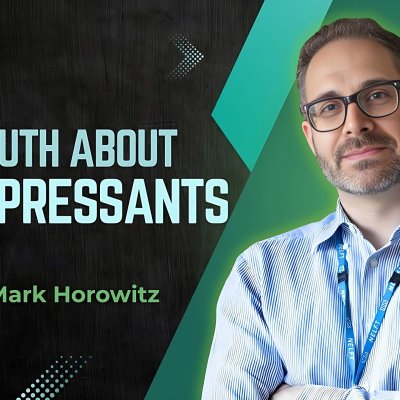
The RNZ article rightly describes the struggles of deprescribing but does not detail the practical protocol many patients and clinicians now rely on. That is why we are sharing the work of Dr Mark Horowitz here.

Horowitz, a psychiatrist who experienced severe withdrawal himself after long-term use, developed a careful method of tapering based on how these drugs actually affect the brain. Instead of cutting the dose in equal steps, the reductions get progressively smaller, using a “hyperbolic” or proportional taper. This approach aims to reduce the shock to the nervous system and lower the risk of severe withdrawal.

His guidance, developed with Professor David Taylor, is set out in The Maudsley Deprescribing Guidelines, currently the leading, practical, internationally recognised guidelines for safely reducing antidepressants and related psychotropic medications.

Find The Maudsley Deprescribing Guidelines here

Never stop suddenly

Horowitz approach

Never stop these medications suddenly. Work with a doctor who understands slow, careful tapering.

Feeling low or overwhelmed does not mean you are broken or that you need to stay on medication for years. Real connection, purpose, physical strength and practical support often make a deeper and more lasting difference. That is the path we focus on at Kiwis For Good.

If you are on these drugs and want to come off, or if you are being offered them and feel unsure, you deserve honest information and proper support.

Help is available

Kiwis For Good — 0508 FOR KIWIS
Need to Talk? 1737
Youthline — 0800 376 633 or txt 234

Tim Baker
National Director, Kiwis For Good
Growing up with Asperger's Social IssuesCulture Growing up with Asperger's I was diagnosed with Asperger's Syndrome when I was 16. Before then though, my life hadn't been the easiest... Read Uncovering the Significant Suicide Risk Associated With Gender Affirmation Surgeries Social Issues Uncovering the Significant Suicide Risk Associated With Gender Affirmation Surgeries With the increasing acceptance and prevalence of gender affirmation surgeries, a recent study has revealed a concerning trend: transgender individuals who undergo these procedures are at a higher risk of suicide or self-harm afterwards. This study examined data from over 90 million patients across the United States to understand the connection between gender affirmation surgeries and mental health. The researchers analyzed information from February 2003 to February 2023. Read How We Saved Mia: A Race Against the Clock Social Issues How We Saved Mia: A Race Against the Clock Trigger Warning: This story discusses child sexual abuse (CSA) and may be triggering for some readers. If you or someone you know is going through something similar, please call 111 immediately or visit our Need Help section on the Kiwis For Good website. Read My Recovery from Abuse - Jessica Emily Social IssuesCulture My Recovery from Abuse - Jessica Emily Kiwis For Good are proud to introduce Jessica Emily. Jessica has been featured in Woman’s Day and various other publications sharing her journey. She is a leading Empowerment/Mental health Coach, public speaker and recovery enthusiast. Read The Devastating Impact of Pornography on Young Men, Relationships, and Society Social Issues The Devastating Impact of Pornography on Young Men, Relationships, and Society Pornography addiction among young men is fast becoming a public health crisis, with profound implications for mental health, relationships, and society at large. What was once a private vice has now become an omnipresent issue with far-reaching consequences. Read The drugs don’t work, they just make you worse Social Issues The drugs don’t work, they just make you worse Paris Williams, a psychologist, challenges conventional views on mental health and psychosis in his groundbreaking book "Rethinking Madness," advocating for a paradigm shift in understanding and treatment. Through insightful research and case studies, he demonstrates that embracing struggles rather than masking them with quick fixes may lead to profound transformation and full recovery. Read
Help Us Help Others!

Your donations are incredibly important for us, and enable us to use our initiatives to help our fellow Kiwis.

Donate today
Join Our Newsletter

For the latest news and projects, keep up-to-date with our newsletter. We promise not to spam you; we get enough of that ourselves!